
Event
The shmira vigil for the victims of 9/11 תהלים ביי די קרבנות: די שמירה נאך 11טן סעפטעמבער
For seven months, day and night, Jews sat with Tehillim beside the remains of the victims
After the attack on the World Trade Center, Orthodox Jews kept a shmira beside the victims' remains at the city's medical examiner, 24 hours a day, from September 20, 2001 to April 30, 2002. On Shabbos, students from Stern College kept the watch.
Contents (7)
A mitzvah that could not wait
Under Jewish law, a deceased person is not left alone from the moment of passing until burial. Someone sits with the body and recites Tehillim; this is called "shmira." Ordinarily it lasts no more than a day or two, since every effort is made to bury as quickly as possible [1].
After the terrible attack on the World Trade Center in New York on September 11, 2001, the situation was entirely different. The victims' remains were brought to the city's Medical Examiner (the office that identifies the deceased), where they were kept in a dozen refrigerated trucks under a huge tent across from the office, about three miles north of Ground Zero [1]. A quick burial was impossible: identification took months and years.
Seven months, day and night
What emerged there was an extraordinary shmira. From September 20, 2001 until April 30, 2002, more than seven months, a Jew was always sitting there, 24 hours a day, seven days a week, without a single break [1][2]. Volunteers came in shifts of four hours each and recited Tehillim beside the remains [1].
The trucks did not hold Jews alone. But because it was assumed that Jewish victims were among them, it was held that shmira was required [1]. In practice, the volunteers recited Tehillim for all the victims, Jews and non-Jews alike [2].
Who led it
The shmira was organized by Ohab Zedek, the Orthodox shul on Manhattan's Upper West Side. The shul's rabbi, Rabbi Allen Schwartz, asked a congregant, Reb Ermin Osgood, a shoe salesman who had just retired, to run it [2]. Osgood laid out the schedule on a yellow sheet of paper and began writing in names. Many of the volunteers came from his congregation; others came from New Jersey and Pennsylvania [1][2]. By his own account, he turned no one away: anyone who could not read Hebrew, he told to recite the Tehillim in English [2].
Shabbos: the students of Stern College
The hardest time was Shabbos, when one cannot travel. Ohab Zedek was too far to walk. Here the students of Stern College, the women's college of Yeshiva University, stepped in; their dormitories were only a few blocks from the site at 30th Street and First Avenue [1][2]. One student, Jessica Russak-Hoffman, recruited more than a dozen young women. Others took the shift from midnight to four in the morning, and a student who lived nearby cooked the Shabbos meals for those sitting shmira [2]. The New York Times later described their work [1].
A kiddush Hashem
Rabbi Schwartz took a shift every Friday morning. He recounted that once a Catholic family, unable to find a priest, asked him to say something. He recited the "Kel Malei Rachamim," the prayer said at a funeral, in English, and that, he said, was a kiddush Hashem [2].
The first yahrzeit
A year later, the first yahrzeit according to the Jewish calendar fell on the first night of Selichos. Those who had sat shmira gathered again at the Medical Examiner, recited Selichos, and then divided the entire Tehillim among themselves and completed it in a few minutes [1].
Why it matters
The story shows how an ancient Jewish mitzvah, kavod hames (honoring the dead), was upheld even in the hardest circumstances, in the middle of a city in mourning. For our readers it is also part of the broader story of how Jews in New York, Chassidim, Litvish and Modern Orthodox, responded to September 11. The Shuki Pedia video on September 11 tells more about those days.
Sources
- Dept. of Remembrance: Watching over the 9/11 dead with shmira — JTA (accessed October 20, 2026)
- After 9/11, Jewish volunteers kept watch over the dead — The Forward (accessed October 20, 2026)
Videos
Last updated: October 20, 2026. Spotted an error? Let us know.
Related

9/11 and the Hasidic & Orthodox Community
Hundreds of Jews were killed in the terror attacks of September 11, 2001, in New York. Volunteers of Chevra Hatzalah rushed to…

Chabad-Lubavitch
Chabad was founded in 1775 by Rabbi Shneur Zalman of Liadi, the Baal HaTanya, in the town of Liozna in White Russia. The name…
Williamsburg (Brooklyn)
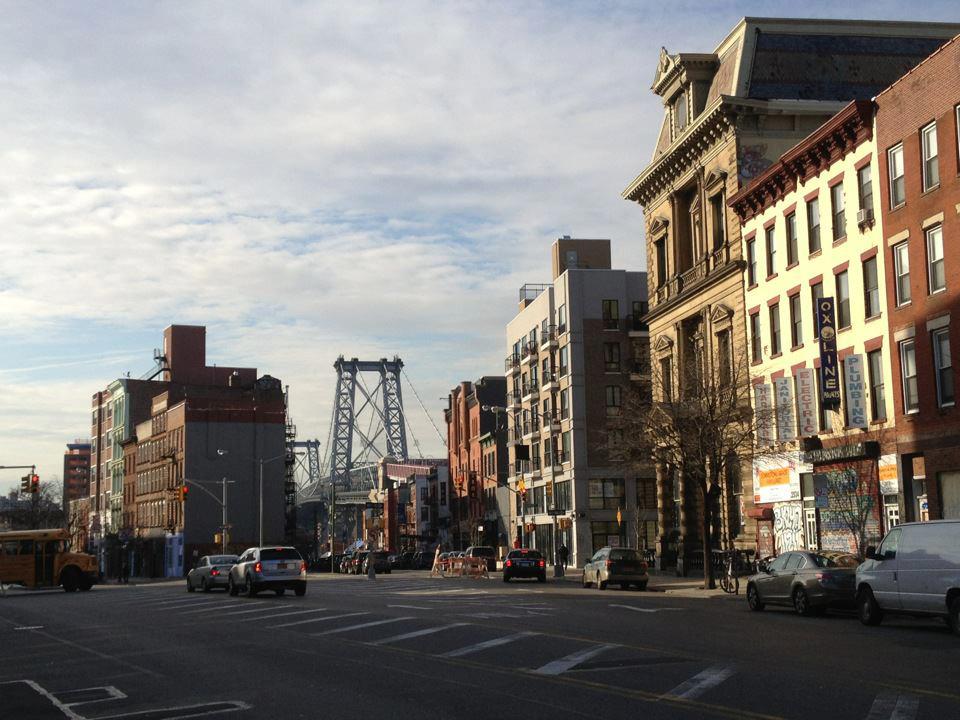
Williamsburg is a neighborhood in northern Brooklyn, New York, beside the Williamsburg Bridge that leads to Manhattan. After…

Borough Park (Brooklyn)
Borough Park is a neighborhood in southwestern Brooklyn, New York, and is counted among the largest Jewish neighborhoods in the…

Monsey (New York)
Monsey is a hamlet in the Town of Ramapo, Rockland County, New York, with a large and growing Charedi community. It is considered…

Jewish (Hasidic) Music in the 2000s
The first decade of the 2000s was a vibrant era for Hasidic and Orthodox music: veteran stars such as Mordechai Ben David and…
Comments & discussion
✍️ Write a comment
No comments yet. Be the first.