
Humour
Le kiddouch à la synagogue : étude de terrain sur le hareng et le kugel דער קידוש אין שול: א פעלד-שטודיע מיט הערינג און קוגל
"Just one l'chaim", the gabbai's announcements, and the great race to the cholent
Une visite chaleureuse et légère du kiddouch du Chabbat à la synagogue, du hareng jusqu'à la dernière cuillère de tcholent. Avec un peu de vraie halakha et de coutume derrière le « Kiddoucha Rabba ».
🌐 Le texte complet n'est pas encore traduit; il est affiché en anglais.
Contents (5)
"The great kiddush"
We have to start with a little seriousness, because the kiddush has a fine pedigree. The Shabbos morning kiddush is called "Kiddusha Rabba", "the great kiddush", a name already mentioned in the Talmud, even though it is actually the shorter one, and it is an obligation of rabbinic origin [1]. The Talmud (Pesachim 106a) says the daytime kiddush is essentially just the blessing over wine, and verses were added later [1]. According to the Shulchan Aruch, kiddush should be said where one eats a meal, and according to most Rishonim eating mezonos, a piece of cake or cookies, is enough [1].
A humor piece on Aish.com describes the kiddush as snack-time that rewards those who came to shul and tides them over until the meal [2].
And so, from "a piece of cake" grew one of the finest institutions in Jewish life.
The menu
What do you find at a kiddush? According to Wikipedia: cake, crackers, gefilte fish, herring, kugel and cholent [1]. According to every Jew who has ever stood at a kiddush: the same list, but in a particular order. First herring, because "you have to make a l'chaim", then kugel, because "it's already there", and then cholent, because "it won't last".
Shavuos, you should know, is different: then the custom is to serve dairy, like cheesecake and blintzes [1]. The herring goes on a short vacation.
"Just one l'chaim"
Every kiddush has its "just one l'chaim". It is a measurement no mathematician has yet calculated. "Just one l'chaim" is made for the baal simcha, for his father, for his father-in-law, for the whole family, and finally "for all of Klal Yisroel". Then you go home to the real meal and say: "I only nibbled a little."
The gabbai's announcements
In the middle of the kiddush the gabbai bangs on the table. Everyone goes quiet, except the man who has just reached the kugel. The gabbai thanks the baal simcha, mentions that the shiurim start after Shabbos, that a tenth man is still needed for tomorrow's Mincha, and asks nicely that nobody leave plates on the benches. Everyone nods. The plates stay there until next week.
The great race to the cholent
And then, the moment. The cholent pot is brought out. Within a minute the area around it becomes the most crowded spot in town. Nobody stands in line; people stand "in a big circle". Grown men in shtreimels and bekeshes display a punctuality otherwise seen only at the earliest zman for Krias Shema.
But when you look from the side, you see what a kiddush really is: neighbours who haven't seen each other all week, a father bringing his little boy for the first time, an older man who finally has someone to talk to, a baal simcha beaming. The kugel is the excuse; the togetherness is the point. And the cholent? That's already finished.
Sources
- Kiddush — Wikipedia (accessed 20 octobre 2026)
- Shul Kiddush Best Practices — Aish.com (accessed 20 octobre 2026)
Dernière mise à jour: 20 octobre 2026. Une erreur ? Faites-le nous savoir.
À voir aussi
The Chasid and the Litvak at the Kiddush: Two Worlds at One Table
A Chasid and a Litvak stand at the same kiddush table, each with his own system. A warm side-by-side look at two worlds over…
The Great Kugel Debate: Lokshen vs. Potato
Lokshen kugel or potato kugel? At every kiddush and Shabbos table the same question comes up. We heard both sides.
Siyum or L'chaim? Every Excuse for a Kiddush — A Field Guide
Yidden don't need a reason to make a l'chaim — but it doesn't hurt to have one. A catalog of the finest "excuses" for a kiddush,…
Are You in a Litvish or a Chasidish Shul? A Checklist
Walked into an unfamiliar shul and not sure where you are? Grab a pencil and check the boxes — this list will tell you.
The Yeshiva Cholent Ranking: Thursday-Night Mishmar, Graded
Every bochur knows: Thursday night you learn late, and the reward is a pot of cholent. We handed out grades.
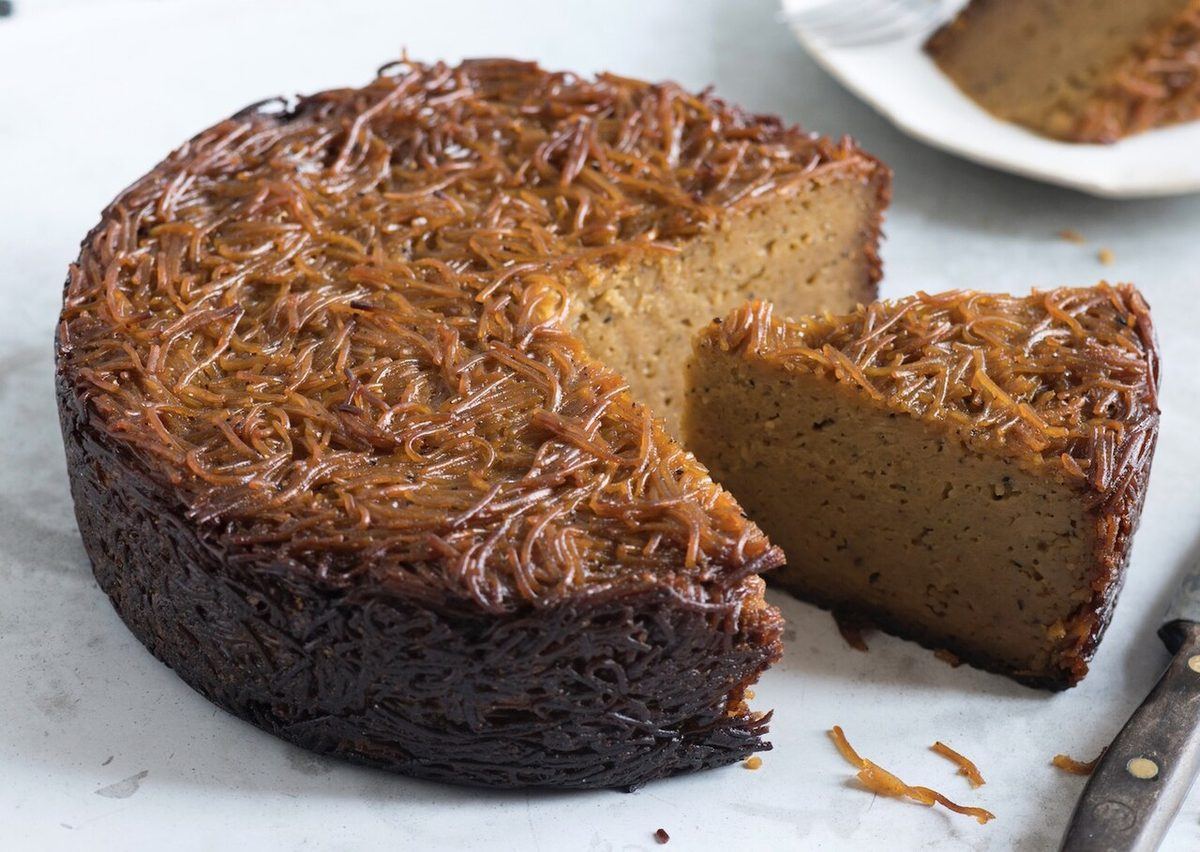
Le kugel yerouchalmi : histoire et recette
Le kugel yerouchalmi est né dans l'ancienne communauté juive de Jérusalem au XVIIIe siècle, avec du sucre caramélisé, du poivre…
Commentaires et discussion
✍️ Écrire un commentaire
Pas encore de commentaires. Soyez le premier.