
History
Hasidic Life in New York, 2000–2007 חסידיש לעבן אין ניו יארק, 2000–2007
Births, new homes, a new chapter for Satmar, and the music that accompanied a generation
Edit / add infoThe years 2000 to 2007 were a time of strong growth for New York's Hasidic communities: Borough Park had the most births in the city, Kiryas Joel grew, and after the passing of the Satmar Rebbe in 2006 a new chapter began. The music of MBD, Avraham Fried and Lipa Schmeltzer accompanied that generation.
Contents (6)
A Growing Generation
The years from around 2000 to 2007 were years of strong growth for New York's Hasidic communities. The clearest sign was the birth figures: in 2004, Borough Park recorded 4,523 births — the most of any neighborhood in New York City. Second was Williamsburg, home to many Satmar Chassidim, with 3,839 births [1]. Large families brought a wave of building and home expansion — larger bedrooms and kitchens [1].
Borough Park — A City of Courts
Borough Park is today one of the largest Orthodox communities outside Eretz Yisroel [1]. In the 1980s the neighborhood changed from an Italian, Irish and Modern Orthodox area into a Hasidic one [1]. The largest Hasidic group there is Bobov (including Bobov-45), and Boyan, Belz, Ger, Satmar, Karlin-Stolin, Vizhnitz, Viener, Munkatch, Spinka, Klausenburg, Skver, Pupa and others have communities there as well [1]. Thirteenth Avenue, a shopping street of about a mile, serves the Jewish household, and shoppers come from all over New York, from other states and even from abroad [1].
Williamsburg and Satmar
Chassidim arrived in Williamsburg mainly after the Churban, in the late 1940s and early 1950s — survivors from the towns and villages of Hungary and Romania, led by the Rebbes of Satmar, Klausenburg, Vien, Pupa, Tzelem, Skver and others [2]. South Williamsburg became a center of Yiddish-speaking Chassidim, above all Satmar [2].
A major event of those years was the passing of the Satmar Rebbe, Rabbi Moshe Teitelbaum, in 2006. After his passing, the Chassidim of his two sons, Rabbi Aharon and Rabbi Zalman Leib, each declared that their candidate was the successor according to the will, and since then each has led separate communities and institutions [3]. Rabbi Aharon is based in Kiryas Joel, and Rabbi Zalman Leib in Williamsburg [3].
Kiryas Joel — A Town of Children
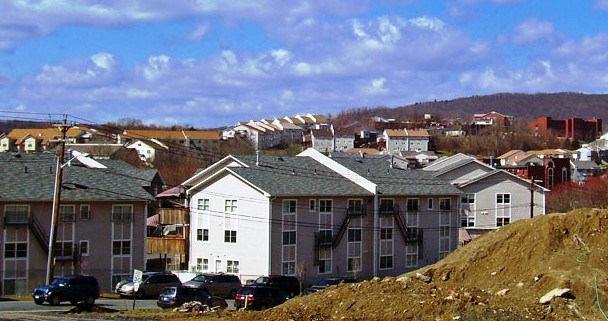
In the same years, Kiryas Joel in Orange County grew into a full-fledged Hasidic town. It began in 1977 with 500 residents [4]. By the 2000 census it already counted 2,229 households, and 91.5% of residents spoke Yiddish at home — only 6.3% spoke English alone [4]. According to U.S. government figures, Kiryas Joel has the youngest population of any municipality in the country, and since the 2000s it has grown dramatically [4].
The Music of Those Years
For many Hasidic children and bochurim of that era, the "soundtrack" was the Jewish music album. Mordechai Ben David (MBD), known as "the King of Jewish Music," had sold more than a million albums by June 2004 [5]. During these years Avraham Fried released albums such as "Avraham Fried Live!" (two CDs, 2001), "Avinu Malkeinu" (2003) and "Bein Kach U'vein Kach" (2006), and he also sings many songs in Yiddish [6].
At the same time a new star was rising — Lipa Schmeltzer, born in 1978 and raised in New Square [7]. After his wedding he began singing and performing as a badchan at weddings and bar mitzvahs in the Hasidic communities of Brooklyn and upstate. His second album, "Shema," came out in 2001 with producer JJ Fried [7]. His style, a blend of Hasidic music with modern styles, drew great interest — and also criticism from certain circles [7].
Memories
For many of our readers, the years 2000–2007 were the years of their childhood: the streets of Borough Park and Williamsburg, the albums on Motzei Shabbos, the great weddings. Shuki Pedia's videos "Childhood Memories (2000–2007)" and "Jewish Singers in the Early 2000s" bring those times back.
Sources
- Borough Park, Brooklyn — Wikipedia (accessed October 20, 2026)
- Williamsburg, Brooklyn — Wikipedia (accessed October 20, 2026)
- Satmar (Hasidic dynasty) — Wikipedia (accessed October 20, 2026)
- Kiryas Joel, New York — Wikipedia (accessed October 20, 2026)
- Mordechai Ben David — Wikipedia (accessed October 20, 2026)
- Avraham Fried — Wikipedia (accessed October 20, 2026)
- Lipa Schmeltzer — Wikipedia (accessed October 20, 2026)
Videos
Businesses in the area
Last updated: October 21, 2026. Spotted an error? Let us know.



Comments & discussion
Write a comment
No comments yet. Be the first.